TNPSC General Studies: The Beginner's Success Roadmap
Table of Contents
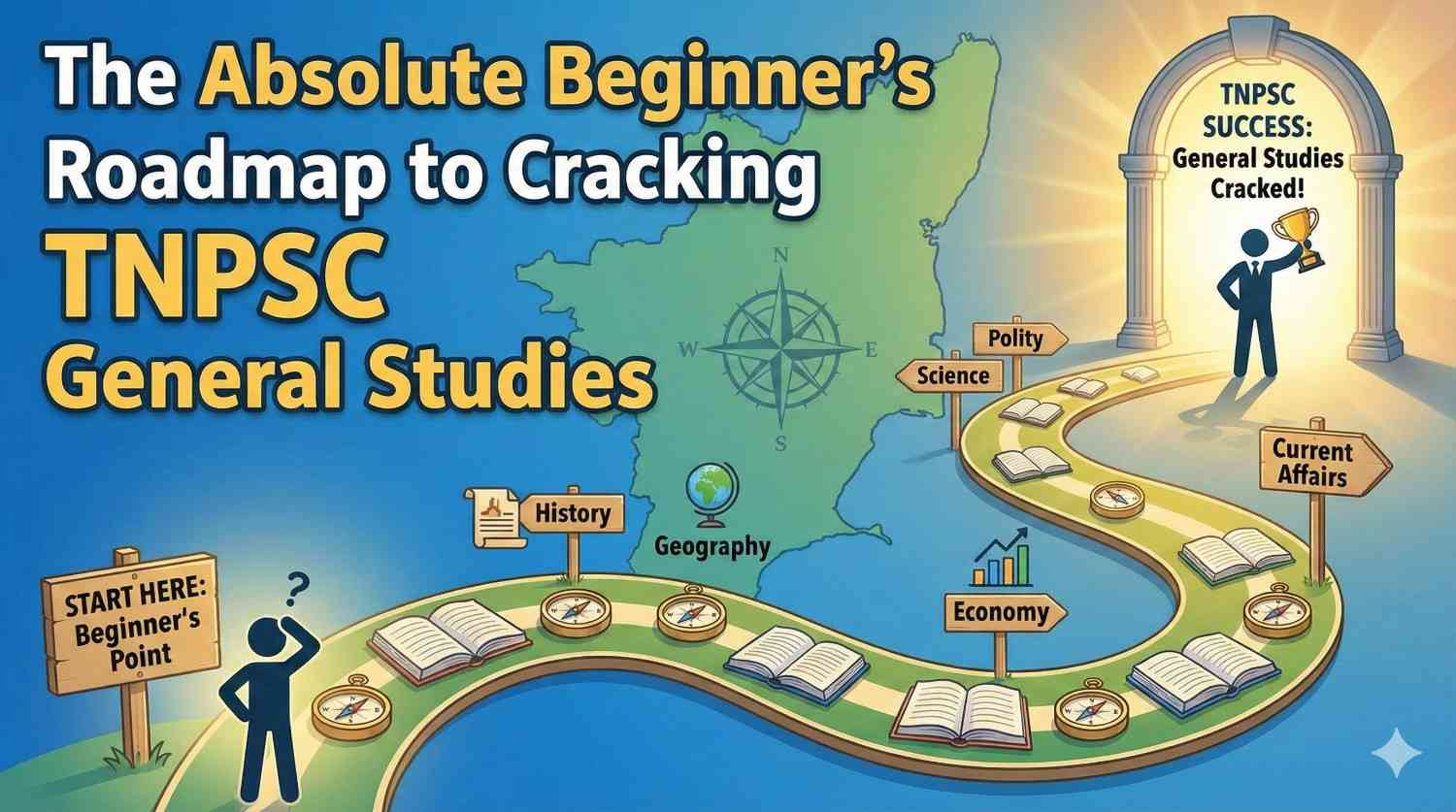
Are you an absolute beginner eyeing the TNPSC exams, but feeling overwhelmed by the vast syllabus of General Studies (GS)? You're not alone! Many aspirants find the sheer volume of information daunting. But fret not, every journey begins with a single step, and with the right roadmap, you can confidently navigate and conquer TNPSC General Studies.
Step 1: Understand Your Battlefield – The Syllabus
Before you open a single book, download and thoroughly read the official TNPSC General Studies syllabus for the specific exam you're targeting (Group 1, 2, 4, etc.). This is your blueprint. Highlight key topics, understand the weightage given to different subjects, and identify areas that you might already have some familiarity with. Don't just skim; internalize it.
Step 2: Gather Your Weapons – The Study Material
For TNPSC GS, the primary and most crucial resource is the Samacheer Kalvi school textbooks (6th to 12th standard) published by the Tamil Nadu government. These are goldmines! Focus on:
- History & Culture of India: Particularly Tamil Nadu History, Culture, Heritage, and Socio-Political Movements.
- Indian Polity: Constitution, Preamble, Fundamental Rights, Duties, etc.
- Indian Economy: Basic concepts, Five Year Plans, current economic scenarios.
- Indian Geography: Physical features, climate, agriculture, resources.
- General Science: Physics, Chemistry, Botany, Zoology (focus on basic concepts).
- Aptitude & Mental Ability: Practice mathematical problems and logical reasoning.
- Current Affairs: Daily newspapers, monthly current affairs magazines/websites.
Step 3: Chart Your Course – Create a Study Plan
A well-structured study plan is non-negotiable. As a beginner, dedicate ample time to foundational concepts.
- Daily Targets: Set realistic daily and weekly goals.
- Subject Rotation: Don't stick to one subject for too long. Rotate between a 'heavy' subject (e.g., Polity) and a 'lighter' one (e.g., General Science) or Aptitude.
- Time Blocks: Allocate specific time slots for different subjects. For instance, 2 hours for History, 1 hour for Current Affairs, 1 hour for Aptitude.
- Break it Down: Instead of thinking 'I'll study History', think 'I'll complete Ancient Indian History from 6th & 7th Samacheer Kalvi books this week'.
Step 4: The Core Strategy – Master Samacheer Kalvi
This cannot be stressed enough. Read the Samacheer Kalvi books multiple times. As a beginner:
- First Read: Read for understanding. Don't worry about memorizing everything.
- Second Read: Make short, crisp notes. Focus on keywords, dates, names, and concepts.
- Third Read: Revise your notes and the book. Solve the questions given at the end of each chapter.
- Prioritize: Give more emphasis to 9th, 10th, 11th, and 12th standard books, especially for core subjects like History, Polity, and Economics.
Step 5: Stay Updated – Current Affairs Integration
Current Affairs are dynamic and crucial. Make them a daily habit:
- Newspaper Reading: Devote 45-60 minutes daily to a good newspaper (e.g., The Hindu, The Indian Express). Focus on national news, state news, economy, and international relations.
- Monthly Compilations: Supplement your daily reading with monthly current affairs compilations from reputable sources.
- Make Notes: Categorize your notes (e.g., appointments, awards, schemes, sports) for easier revision.
Step 6: Practice Makes Perfect – Previous Year Papers & Mock Tests
Once you've covered a significant portion of the syllabus:
- Previous Year Question Papers (PYQs): Start solving PYQs from various TNPSC exams. This helps you understand the exam pattern, question types, and important areas.
- Mock Tests: Regularly take full-length mock tests under timed conditions. This builds speed, accuracy, and stamina. Analyze your performance to identify weak areas and improve.
Step 7: The Final Touch – Revision
Revision is not just re-reading; it's about active recall. Implement:
- Daily Revision: Quickly review what you studied the previous day.
- Weekly Revision: Dedicate a day (e.g., Sunday) to revise the entire week's topics.
- Monthly Revision: Consolidate your monthly learning.
- Short Notes & Flashcards: Use these tools for quick and effective revision, especially closer to the exam.
Key Mindset Tips for Beginners:
- Patience & Persistence: Cracking TNPSC is a marathon, not a sprint.
- Stay Positive: Don't get discouraged by initial setbacks or tough topics.
- Health First: Ensure adequate sleep, a healthy diet, and short breaks.
- Avoid Information Overload: Stick to limited, high-quality resources. Don't jump from one book to another.
Embarking on the TNPSC General Studies journey as a beginner might seem challenging, but with this structured roadmap, consistent effort, and a positive attitude, you are well on your way to success. Good luck!